Emergency Medical Information Card: What to Include for an Aging Parent
Learn what to include on an emergency medical information card for an aging parent, from medications and allergies to emergency contacts, doctors, insurance details, and important documents.
Editorial disclaimer
This article helps caregivers organize information for emergencies. It is not medical advice and should not be used instead of calling emergency services or contacting a qualified healthcare professional.
When an aging parent needs urgent care, the hardest part is often not remembering one fact. It is remembering everything at once: medications, allergies, doctors, insurance, emergency contacts, recent procedures, and what changed this week.
Stress makes details harder to recall, especially if the caregiver who knows the most is not present.
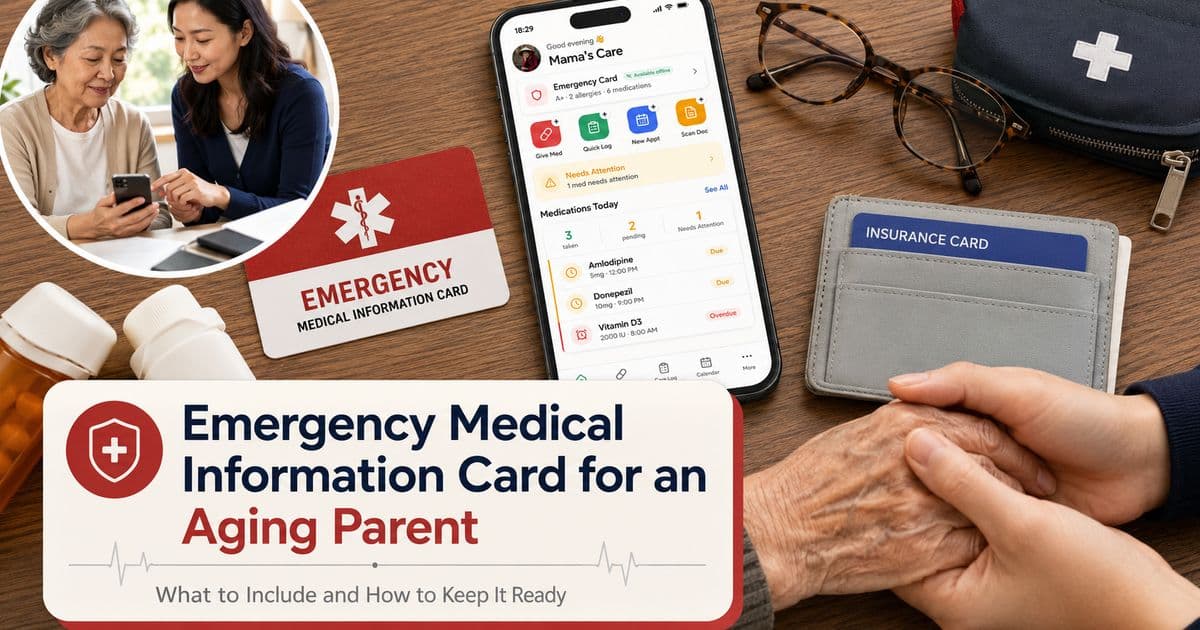
An emergency medical information card gives families a simple way to keep essential information ready. It can be printed, saved on a phone, or stored in a caregiving app.
The purpose is not to replace medical records. The purpose is to help caregivers quickly share accurate, current information when time and clarity matter.
For families caring for an elderly parent, this card is especially useful during hospital visits, ambulance calls, travel, respite care, and situations where a sibling, neighbor, or spouse may need to step in.
What is an emergency medical information card?
An emergency medical information card is a concise summary of the most important health and contact information someone may need during an urgent situation.
It usually includes identity details, emergency contacts, current medications, allergies, medical conditions, clinicians, insurance information, and relevant documents.
MedlinePlus describes personal health records as including information such as name, birth date, emergency contacts, medicines and supplements, allergies, chronic diseases, surgeries, and test results.
A caregiver emergency card is a shorter, action-focused version of that idea.
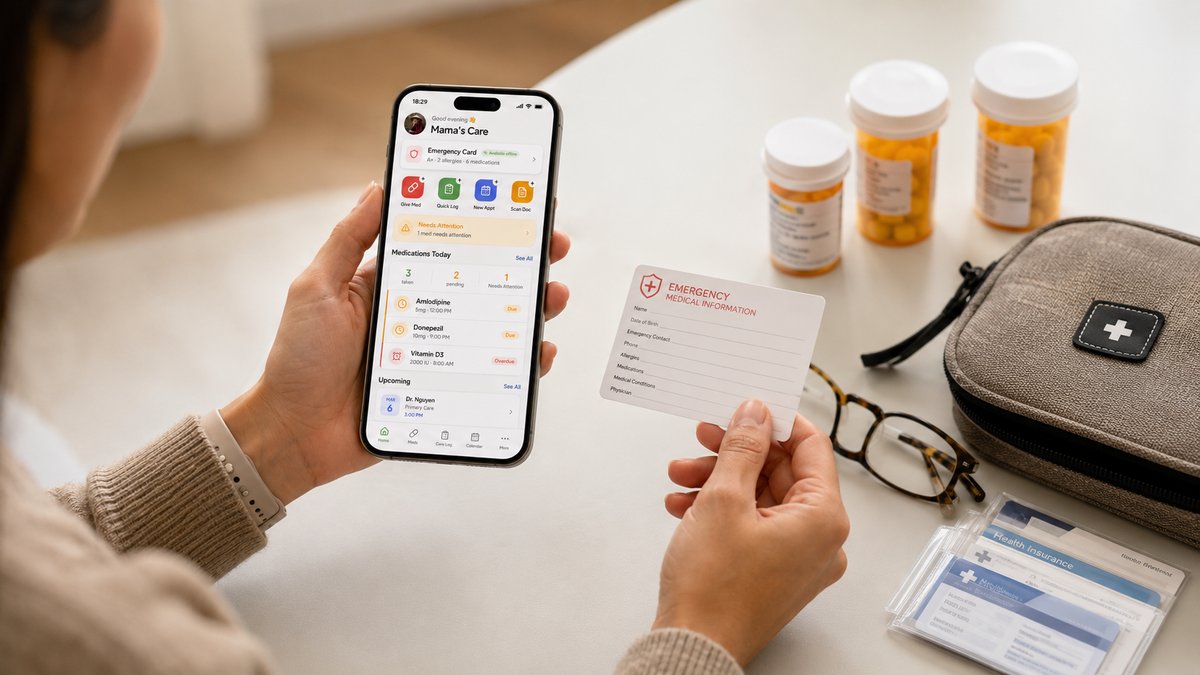
What to include on an emergency medical information card
A good emergency information card should be short enough to use quickly, but complete enough to help caregivers and professionals understand the most important details.
What to include | Why it matters | TendLog angle |
|---|---|---|
Basic identity | Name, date of birth, preferred language, and key identifiers help avoid confusion. | Emergency Info Card |
Emergency contacts | Shows who to call first and who can make decisions if applicable. | Family Coordination |
Current medications | Gives clinicians and caregivers a quick view of current prescriptions, OTC medicines, and supplements. | Medication Tracker |
Allergies and reactions | Helps avoid known allergy risks during urgent care. | Emergency Info Card |
Medical conditions | Provides context such as diabetes, heart disease, dementia, stroke history, or other known conditions. | Emergency Info Card |
Doctors and pharmacy | Makes it easier to contact the care team or verify medication details. | Care profile |
Insurance information | Helps with administrative steps during urgent care. | Document Vault |
Important documents | Points caregivers to POA, advance directive, insurance cards, lab reports, or discharge summaries. | Document Vault |
Communication needs | Notes hearing, vision, language, memory, or mobility needs. | Care notes |
Keep it short enough to use under stress
An emergency card should not become a full medical archive. If it is too long, nobody will read it when time is short.
Think of it as the first screen or first page: the most important facts someone needs immediately, plus a path to more detailed records if needed.
Here are a few practical rules:
Use clear labels and plain language.
Put emergency contacts near the top.
Keep the medication list current.
Highlight serious allergies or critical conditions clearly.
Add where to find supporting documents, but do not overload the card with every file.
Paper card vs digital emergency card
A paper card is easy to place in a wallet, purse, refrigerator folder, or travel bag. It does not require battery life or an app login. The downside is that it can quickly become outdated.
A digital emergency card is easier to update and can connect to medication lists, documents, and family contacts. The downside is that it must be accessible when needed.
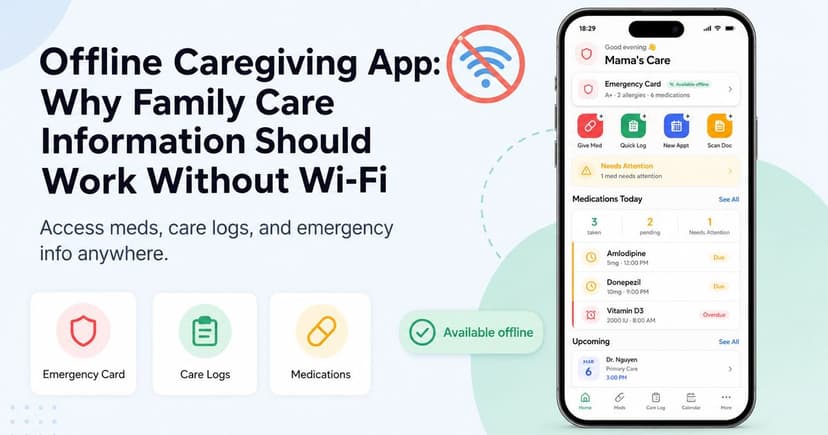
That is why offline access matters. A digital card is much more useful when it can be opened even without Wi-Fi or cell signal.
Many families should use both: a short printed card for immediate visibility and a digital caregiving hub for current details, documents, and family coordination.
How often should you update the card?
Review the emergency information card whenever a medication changes, a new diagnosis is added, a hospital visit happens, insurance changes, or a new caregiver joins the family care team.
If nothing major changes, a monthly or quarterly review can help keep the information accurate.
A simple rule works well: after every appointment or medication change, check whether the emergency card needs an update.
Privacy considerations for emergency information
Emergency information is sensitive. Caregivers should balance access and privacy.
The card should include what is useful in an urgent situation, but it should not expose unnecessary details to everyone.
For digital tools, families should understand how data is stored, whether it is encrypted, whether the app uses tracking or ads, and how information can be exported or deleted.
TendLog’s privacy-first and offline-first positioning is important here. Families need fast access to essential information without feeling that private health details are being used for advertising or behavioral tracking.
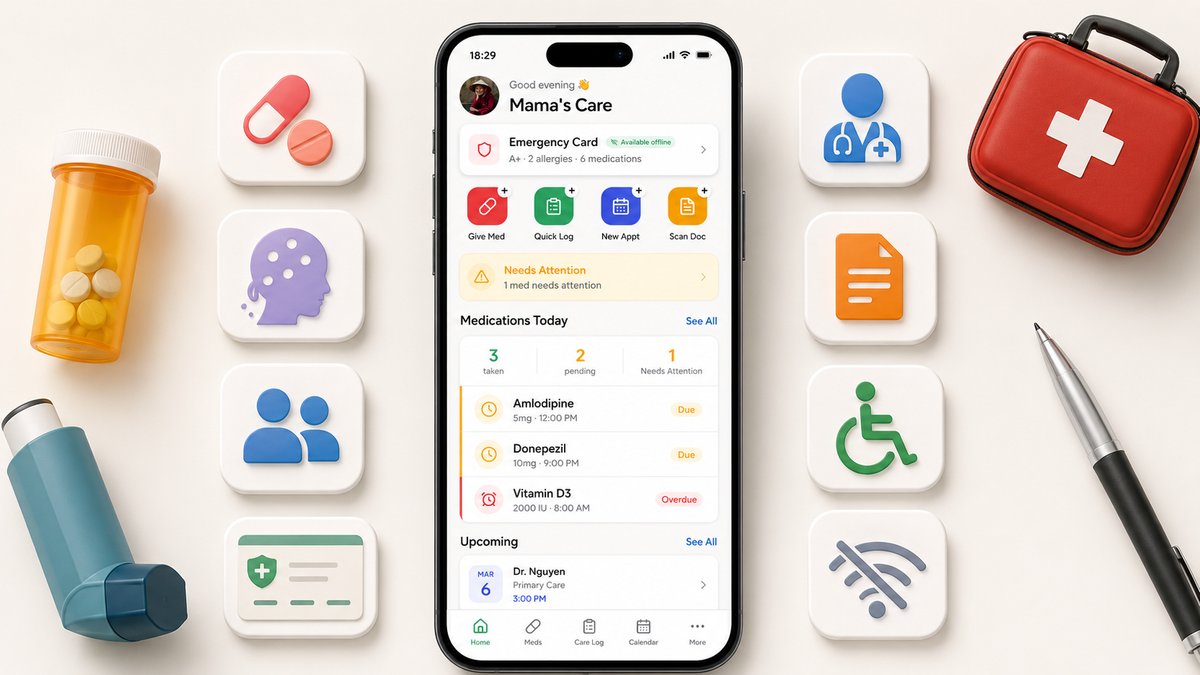
Where TendLog fits
TendLog is designed to keep family caregiving information together: medications, daily care notes, documents, appointments, emergency details, and family coordination.
For emergency preparedness, the Emergency Info Card and Document Vault can work together: the card gives the fast summary, while the vault keeps supporting documents organized.
Because TendLog is offline-first, caregivers can access key information even when connectivity is poor. This makes the emergency card more practical for clinics, travel, rural areas, and stressful moments when logging into multiple systems is unrealistic.
Prepare before the next urgent moment
Prepare your family before the next urgent moment.
Join the TendLog waitlist for a private, offline-first caregiving hub with emergency information, medication tracking, care logs, and document storage.
Emergency card template
Use this simple structure as a starting point:
Section | What to add |
|---|---|
Person details | Full name, date of birth, preferred name, preferred language, address if appropriate. |
Emergency contacts | Primary caregiver, secondary caregiver, relationship, phone, email. |
Current medications | Medication name, schedule as prescribed, prescribing clinician, pharmacy, notes. |
Allergies | Medication, food, or material allergies and known reactions. |
Medical conditions | Known conditions that may matter in urgent care. |
Clinicians | Primary care doctor, specialists, pharmacy, home care agency if applicable. |
Insurance and documents | Insurance provider, member ID location, POA or advance directive location, recent discharge papers if relevant. |
Care notes | Mobility needs, hearing/vision support, dementia-related communication tips, or other practical details. |
FAQ
What should be on an emergency medical information card?
Include basic identity details, emergency contacts, current medications, allergies, medical conditions, clinicians, pharmacy, insurance information, key documents, and communication or mobility needs.
Should an elderly parent carry a printed medical information card?
A printed card can be helpful because it is easy to find and does not require a phone or internet. Many families also keep a digital version so it can be updated more easily.
How often should caregivers update emergency information?
Update the card after medication changes, hospital visits, new diagnoses, insurance changes, or changes in emergency contacts. Review it regularly even when nothing major changes.
How does TendLog help with emergency information?
TendLog helps families organize emergency details, medication information, documents, and care notes in one private, offline-first caregiving hub.