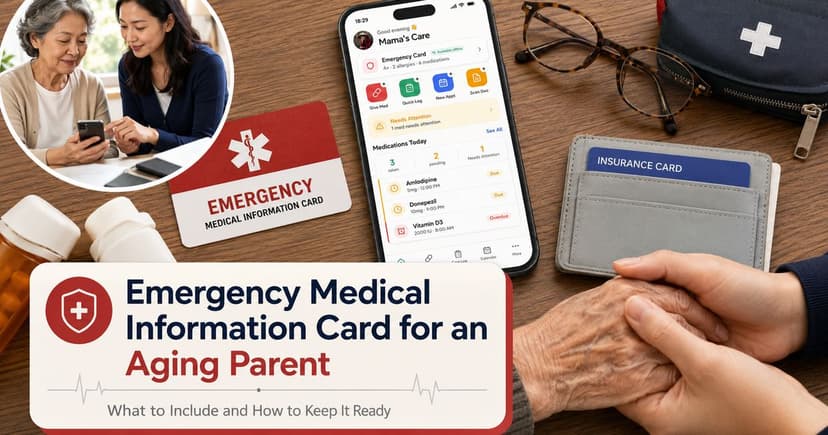
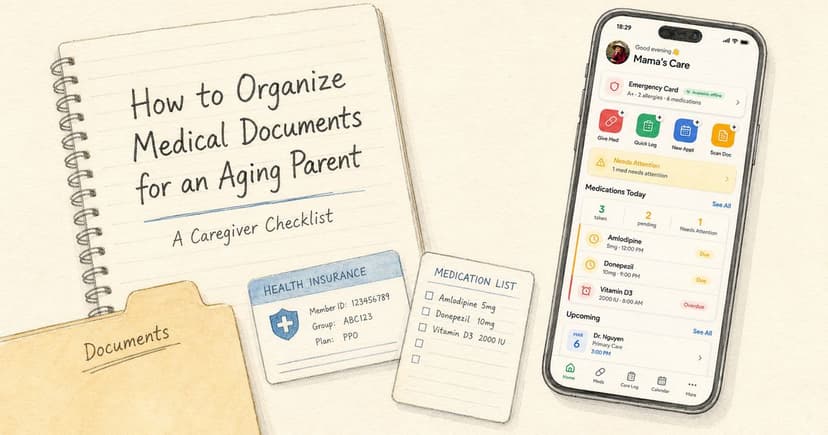
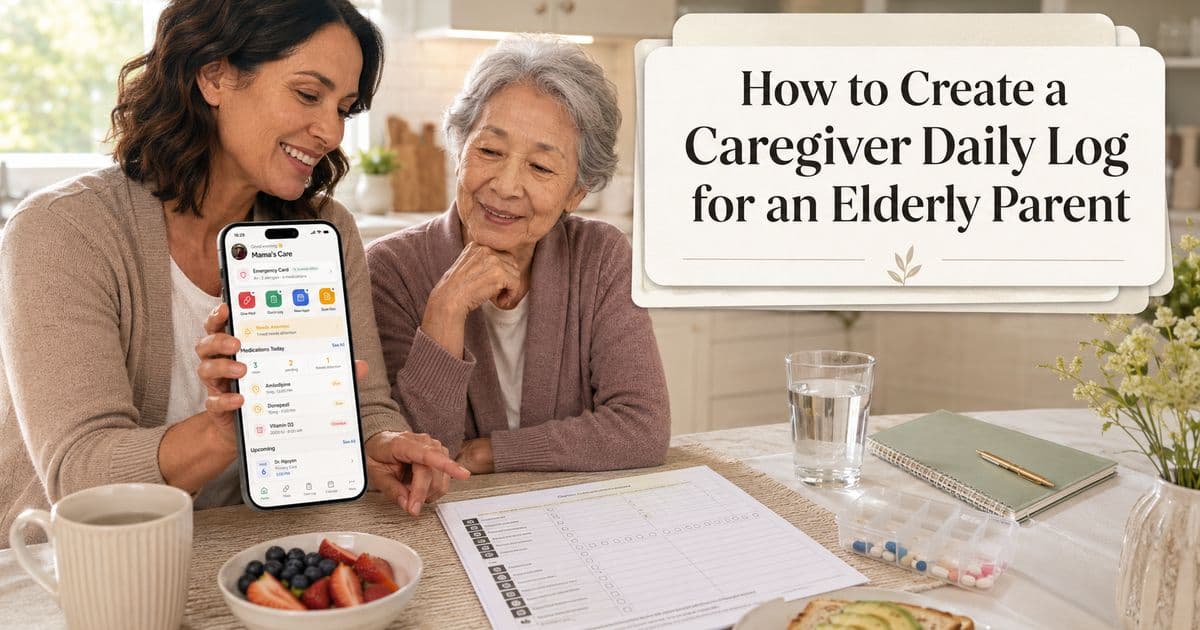
How to Create a Caregiver Daily Log for an Elderly Parent
Learn how to create a simple caregiver daily log for an elderly parent, including what to track, how to keep notes useful, and how TendLog helps families coordinate daily care.
Editorial disclaimer
This guide is for caregiving organization only. It is not medical advice and should not be used to diagnose or treat any condition. Share concerns with a qualified healthcare professional.
A caregiver daily log is one of the simplest tools a family can use to reduce confusion. It does not need to be complicated. At its best, a daily log answers the question every caregiver eventually asks: “What happened today, and what should the next person know?”
For an elderly parent, small daily changes can matter. A missed meal, poor sleep, a new complaint, a late medication, a fall risk, or a note from a doctor visit can easily disappear in a family group chat. A daily log gives those details a consistent home.
This guide explains what to include in a caregiver daily log, how to keep it simple, and how a tool like TendLog can help families organize daily care without relying on memory, scattered notes, or endless text messages.
What is a caregiver daily log?
A caregiver daily log is a shared record of daily care activities, observations, and follow-up items. It can be a paper notebook, spreadsheet, printable template, or caregiving app.
The format matters less than the habit: record the important details in the same place, in a way that the next caregiver can understand quickly.
A good daily log should be easy to update in less than a minute. It should capture enough context for appointments and handoffs, but not so much detail that caregivers stop using it.

Why daily care logs help families
Daily care logs help families in several important ways:
They create continuity. When several people help with care, everyone can see what happened before their shift.
They reduce repeated questions. Family members do not need to ask the same updates in multiple group chats.
They prepare for appointments. Caregivers can bring a clearer summary of recent meals, medications, symptoms, sleep, mood, and questions.
They reduce mental load. The caregiver does not need to hold every detail in memory.
They help notice patterns. Logs can show recurring issues that are worth discussing with a clinician, such as poor sleep, appetite changes, or repeated falls.
The purpose is not to turn caregivers into clinicians. The purpose is to make observations easier to share and easier to act on.
What to include in a caregiver daily log
A useful caregiver daily log does not need to track everything. Start with the details that help your family coordinate care clearly.
What to include | Why it matters | TendLog angle |
|---|---|---|
Date and caregiver name | Makes the record easy to trace later. | Care Log entry ownership |
Meals and hydration | Helps family understand appetite and fluid intake patterns. | Daily Care Log |
Medications | Records whether scheduled meds were logged, skipped, or need follow-up. | Medication Tracker integration |
Mood and behavior | Captures changes family may want to discuss with a clinician. | Care notes |
Sleep and rest | Helps identify routines or changes over time. | Daily notes |
Symptoms or concerns | Creates a clear record for appointments without relying on memory. | Care Log + appointment prep |
Vitals or measurements | Useful when requested by a healthcare professional. | Structured fields if added |
Mobility and falls | Supports fall-risk discussions and care planning. | Incident notes |
Appointments and tasks | Keeps follow-ups, transportation, and reminders visible. | Appointments + Family Coordination |
Questions for the doctor | Prevents important questions from being forgotten. | Appointment notes |
A simple daily log format you can start using today
Use this structure as a starting point. Families can customize it based on the parent’s needs and the amount of care being provided.
Section | Example notes |
|---|---|
Morning | Breakfast eaten? Morning medications logged? Mood/energy? Any pain or discomfort mentioned? |
Afternoon | Lunch/hydration? Walk or activity? Appointment, call, or visitor? Any new concern? |
Evening | Dinner? Evening medications logged? Sleep preparation? Any follow-up for tomorrow? |
Caregiver notes | What should the next caregiver know? Any question for doctor/pharmacist? Any supply to buy? |
How to keep the log useful instead of overwhelming
The biggest mistake is trying to track everything perfectly. A daily log should support the caregiver, not become another source of stress. Start with the smallest useful version and expand only when needed.
Here are a few simple habits that help:
Use short notes instead of long paragraphs.
Agree on common labels such as “taken,” “skipped,” “refused,” “follow up,” or “ask doctor.”
Avoid medical interpretation. Write what you observed and when it happened.
Review the log before appointments and care transitions.
Update the template as the care situation changes.
Paper notebook, spreadsheet, or caregiving app?
A notebook is easy to start but hard to share. A spreadsheet is more shareable but often awkward on mobile and can become messy over time.
A caregiving app is usually better when multiple people need to update information, access history, and connect daily notes with medication schedules, appointments, documents, and emergency details.
For a brand-new caregiving situation, any consistent system is better than no system. But as the number of caregivers, medications, appointments, and documents grows, families usually need a more structured tool.
Where TendLog fits
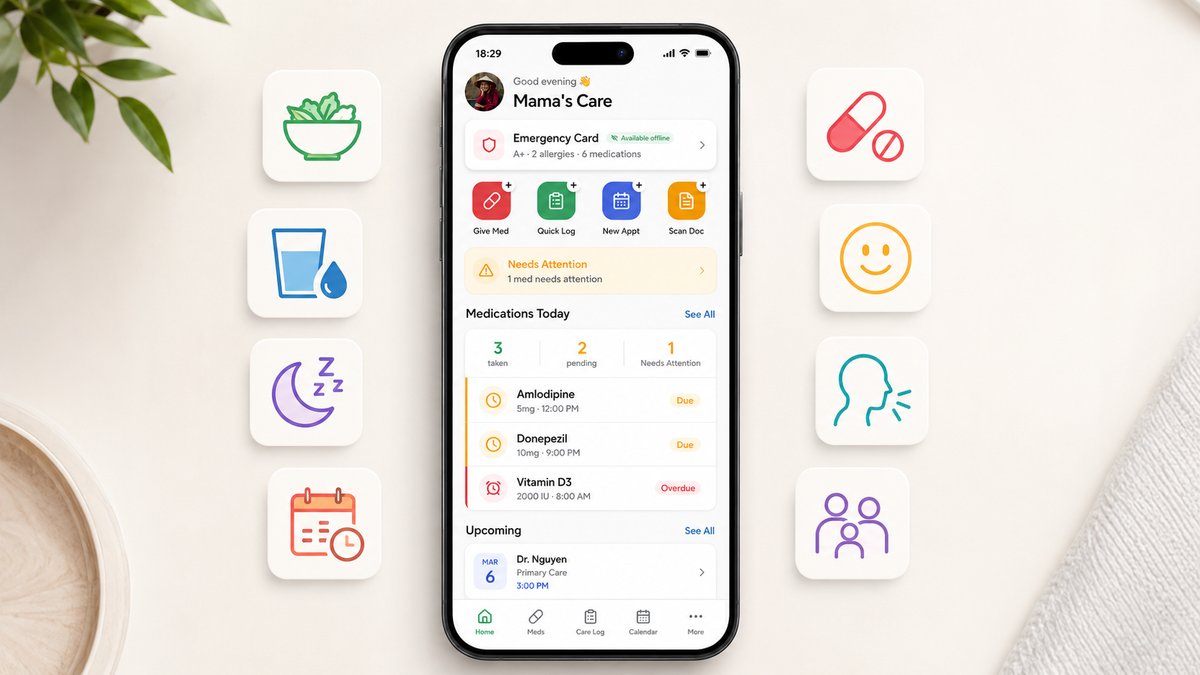
TendLog is built as a family caregiving hub, which makes it a natural home for daily care logs.
Instead of separating medication updates, daily notes, appointment details, and emergency information across different apps, TendLog brings them into one private workspace.
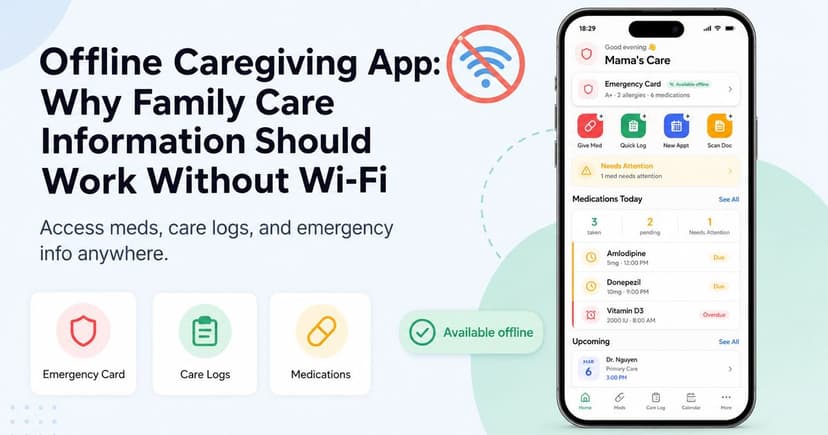
The offline-first design is especially helpful when caregivers need to record care in places with unreliable internet. Families can keep logging and reviewing important information, then sync when connectivity returns.
Want a simpler way to keep daily care notes?
Want a simpler way to keep daily care notes, medication updates, and family handoffs in one place?
Join the TendLog waitlist.
How often should you review a caregiver daily log?
For everyday use, a quick daily update is enough. Families may want a weekly review to identify open tasks, questions for clinicians, supply needs, and repeated concerns.
Before a medical appointment, review the last few weeks and highlight the most important changes or questions.
FAQ
What should be included in a caregiver daily log?
A caregiver daily log can include meals, hydration, medications, mood, sleep, symptoms, vitals, mobility, appointments, tasks, and questions for the doctor. Start small and track the details that actually help your family coordinate care.
Is a caregiver daily log only for professional caregivers?
No. Family caregivers can use a daily log to coordinate care between siblings, spouses, neighbors, and other helpers.
Can a daily care log help during doctor visits?
Yes. A daily log can help caregivers bring clearer observations and questions to appointments. It should support the conversation with healthcare professionals, not replace it.
Is TendLog a caregiver notes app?
TendLog includes daily care logging as part of a broader family caregiving hub, alongside medication tracking, appointments, document storage, emergency information, and family coordination.