Medication Tracker for Caregivers: What to Look For Before Choosing an App
Discover how TendLog helps caregivers organize medications, care notes, emergency information, and family updates in one private, offline-first caregiving app.
Medication Tracker for Caregivers: What to Look For Before Choosing an App
Managing medications for an aging parent can feel simple at first: one pill in the morning, one at night, and a reminder on your phone. But caregiving rarely stays that simple. A new prescription is added after a hospital visit. A sibling helps on weekends. A side effect needs to be discussed with a clinician. Someone asks, “Did Mom already take this?” and nobody is completely sure.
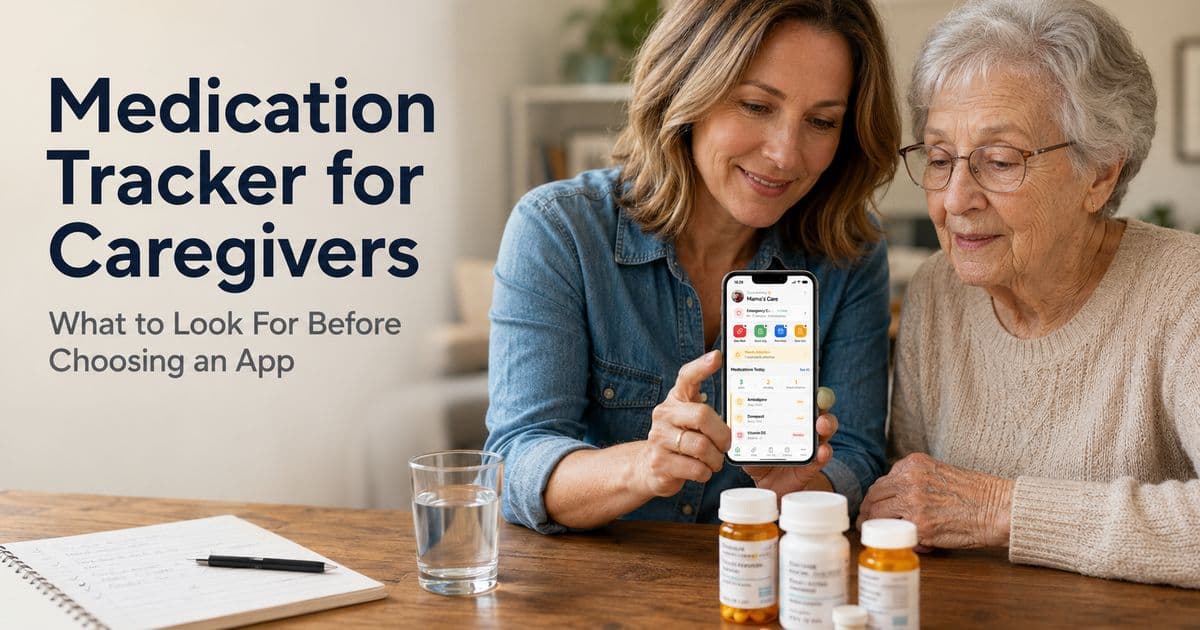
A good medication tracker for caregivers is not just a reminder app. It should help the whole family keep an accurate, shareable, and easy-to-update record of medications, doses as prescribed, schedules, notes, and questions for care visits. The goal is not to replace clinical judgment. The goal is to make day-to-day medication coordination less fragile.
The need is large. AARP and the National Alliance for Caregiving reported in 2025 that 63 million Americans provide ongoing care for an adult or child with a complex medical condition or disability. Many families are trying to manage care while also working, parenting, and coordinating across households. For these caregivers, a clear medication system can reduce confusion and make care handoffs easier.
Why caregivers need more than a basic reminder
Why caregivers need more than a basic reminder
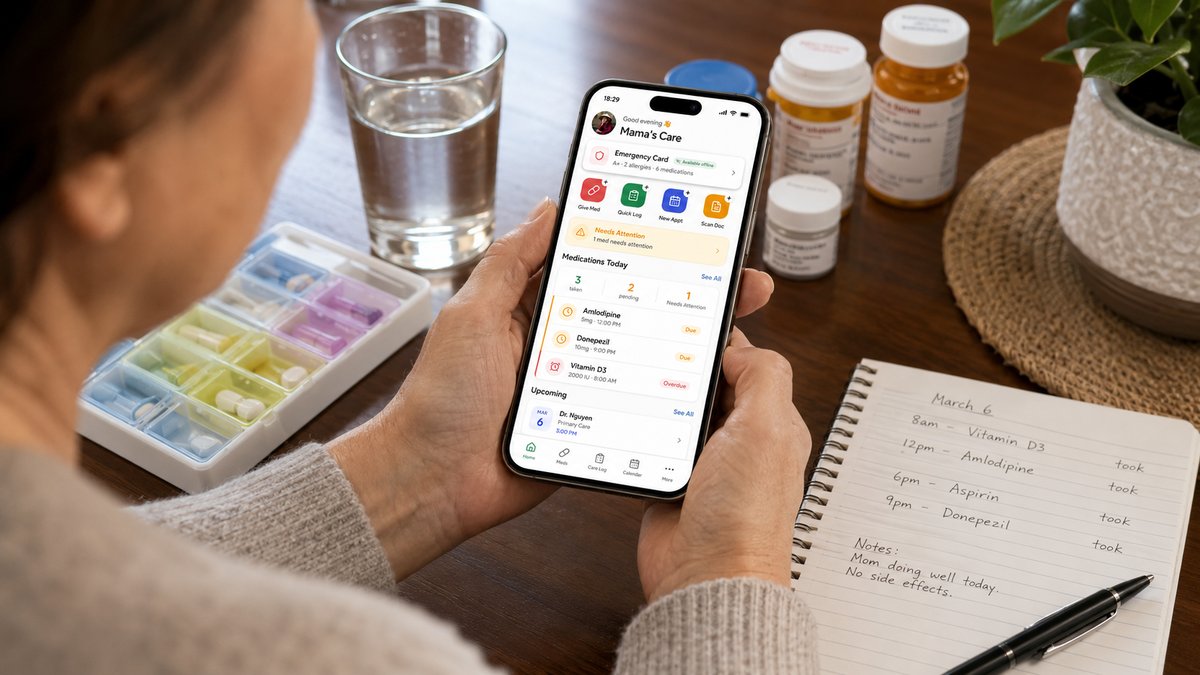
A basic reminder can tell one person when it is time to take a medication. Caregiving requires more context. The person receiving care may not always be the person managing the schedule. The adult child who sets up the list may not be present when the medication is taken. Another family member may need to help after surgery, during travel, or during a weekend shift.
That is why caregiver medication tracking should answer four practical questions:
· What medications, supplements, and over-the-counter products are currently being taken?
· When are they supposed to be taken, based on the clinician’s or pharmacist’s instructions?
· Who last logged a dose, note, or concern?
· What information should be ready for the next appointment or emergency visit?
The National Institute on Aging recommends keeping a medicine list that includes the name of each medicine or supplement, the amount taken, and the time or times it is taken. For caregivers, the challenge is keeping that list current and available when it is actually needed.
9 features to look for in a medication tracker for caregivers
1. A complete medication list, not just alarms
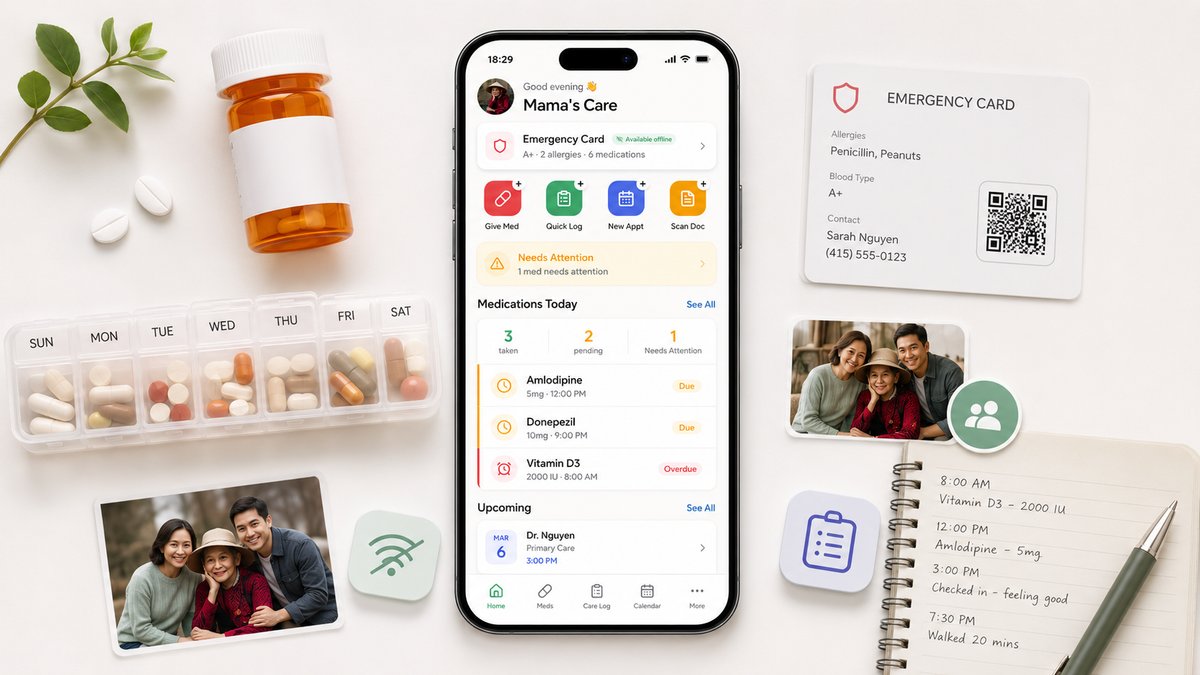
The app should let you record the medication name, schedule, notes, prescribing clinician, pharmacy details, refill reminders, and any instructions that were provided by a healthcare professional. Caregivers should also be able to record vitamins, supplements, and over-the-counter products, because these often matter during appointments and pharmacy reviews.
A medication tracker should not encourage guesswork. It should make it easy to copy information from the prescription label or care plan and keep a clean record for discussion with professionals.
2. Shared family visibility
Care is often a team effort. One sibling may handle doctor appointments, another may help with groceries, and a spouse or neighbor may assist during the day. If only one person has the medication list, the system breaks whenever that person is unavailable.
Look for a tool that supports family coordination, shared updates, and clear ownership. The best experience should make it obvious who entered a note and when it was last updated.
3. Simple dose logging
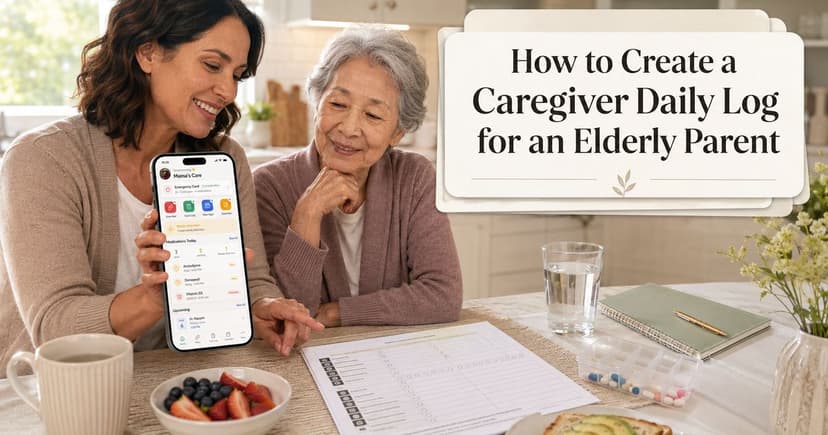
A caregiver app should reduce friction. If logging a dose takes too many taps, people stop using it. The ideal pattern is simple: open the schedule, mark the medication as taken, skipped, or needing attention, and add a short note only when needed.
For families, the value is not only the reminder. It is the shared confidence that everyone can see the latest status.
Medication tracker feature checklist
What to include | Why it matters | TendLog angle |
Current medication list | Keeps everyone aligned on what is currently being taken. | Medication Tracker |
Dose logging | Shows whether a dose was recorded, skipped, or needs follow-up. | Medication Tracker + Care Log |
Family updates | Reduces duplicate questions and “who did what?” confusion. | Family Coordination |
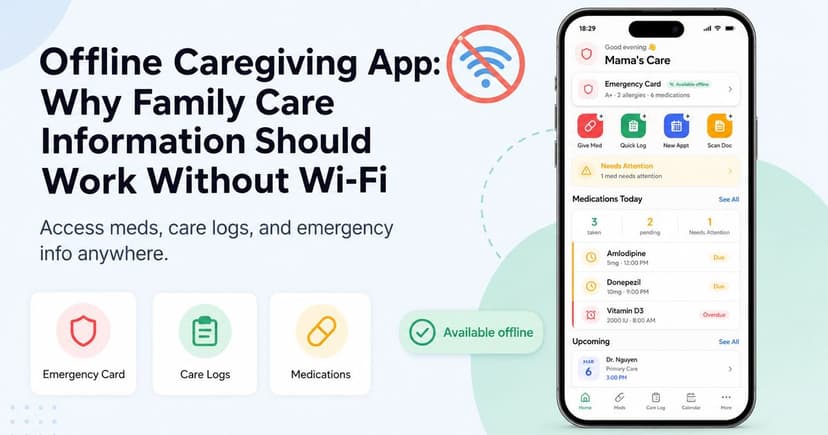
Offline access | Works during travel, hospital visits, or weak signal. | Offline-first app architecture |
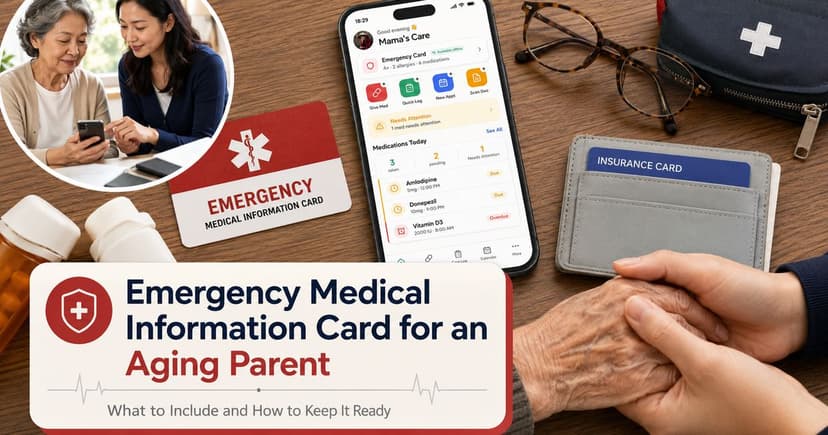
Emergency summary | Helps caregivers show key information quickly. | Emergency Info Card |
Exportable notes | Prepares for appointments and care handoffs. | Care Log / future PDF summary |
How to set up a caregiver medication system
Start with the latest prescription labels, medication bottles, and pharmacy printouts.
Add prescriptions, over-the-counter medicines, vitamins, and supplements to one list.
Record the schedule exactly as instructed by the clinician or pharmacist.
Add prescriber, pharmacy, refill, and appointment details where available.
Invite the family members who actually help with care.
Agree on a simple rule: every dose or medication-related concern should be logged in the same place.
Review the list before every appointment and whenever a medication changes.

Where TendLog fits
TendLog is designed for families who need one private place for caregiving, not a scattered mix of texts, paper notes, and screenshots. For medication management, TendLog can support the family by combining medication tracking with daily care logs, emergency information, appointment notes, and family coordination.
The offline-first approach is especially relevant for caregivers because medication information may be needed in places where connectivity is unreliable. The privacy-first positioning also matters because medication data is personal and should not be treated like generic app activity.
When to contact a healthcare professional
Contact the person’s doctor, pharmacist, or emergency services when you have concerns about medication reactions, missed doses, serious symptoms, or instructions you do not understand. Do not use any app or article as a substitute for medical advice.
FAQ
What is the best medication tracker for caregivers?
The best medication tracker depends on the family’s workflow, but caregivers should look for shared family access, a complete medication list, simple dose logging, offline access, exportable summaries, and a privacy-first design.
Is a medication reminder app enough for an elderly parent?
A reminder app may help one person remember a dose, but caregivers often need more: shared notes, family visibility, appointment preparation, emergency information, and a record of questions or concerns.
Should caregivers track supplements and over-the-counter medicines?
Yes, caregivers should keep a record of supplements and over-the-counter products along with prescriptions, because clinicians and pharmacists may need a complete list when reviewing care.
Can TendLog replace medical advice?
No. TendLog is designed to help families organize and share care information. It does not diagnose, prescribe, or replace professional medical advice.